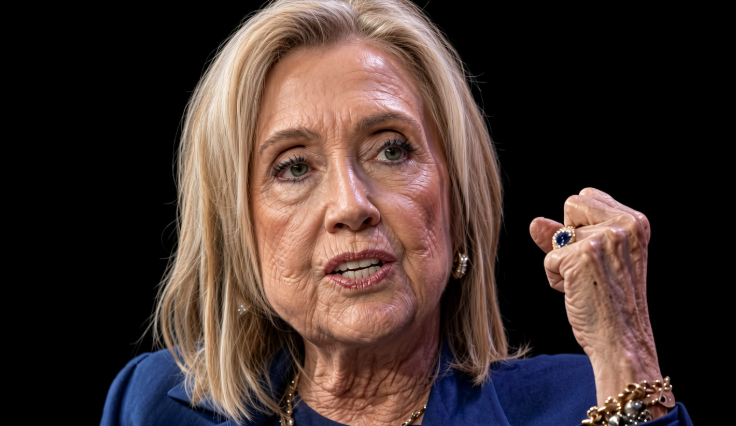
She described recent rhetoric from Trump as “disgraceful” and warned it risks
undermining U.S. credibility on the world stage.
“Words, especially from an American president, have real consequences,” Clinton said, adding that leaders must be held accountable not only for their actions but also for their public statements Clinton framed accountability as extending beyond legal wrongdoing to include standards of leadership and respect for democratic institutions. “We need to hold leaders accountable for what they say as well as what they do,” she said, emphasizing that public trust depends on both behavior and tone from those in power.Negotiations aimed at addressing Iran’s nuclear program ended without agreement, with Vice President JD Vance returning from discussions in Pakistan without a deal.
Her comments come as tensions between the United States and Iran have escalated following the breakdown of diplomatic talks over the weekend Clinton offered a mixed assessment of Trump’s approach The Trump administration has responded by escalating pressure on Iran. The president recently ordered a U.S. naval blockade of Iranian ports in the Strait of Hormuz, a key global shipping route. U.S. Central Command has warned that unauthorized vessels entering the zone could be intercepted or seized, signaling a significant increase in military and economic pressure. She said she supported a targeted strike on Iranian nuclear facilities earlier this year, describing it as a limited and appropriate action. However, she criticized subsequent moves as inconsistent and lacking a clear long-term strategy. “I supported Trump bombing the nuclear sites back in June,” she said. “I thought that was an appropriate and limited strategic objective. I opposed his incoherent attack on Iran.”
“We’re going to have to bring in people who actually know something
about nuclear weapons,” Clinton said She argued that the U.S. must return to structured diplomacy led by experienced experts, particularly those with deep knowledge of nuclear policy and international negotiations.Clinton also referenced her past experience dealing with Israeli leadership, including Prime Minister Benjamin Netanyahu, noting longstanding disagreements over how aggressively to confront Iran. She said U.S. leaders have historically resisted calls for open-ended conflict without a defined objective.
Clinton warned that the failed talks have left the U.S. at a strategic disadvantage. “I worry that the United States is now in a very weak position vis-à-vis Iran,” she said, arguing that Washington has “lost the leverage and initiative” it once held in negotiations The White House pushed back forcefully on Clinton’s criticism In a statement, officials defended the administration’s approach and attacked Clinton’s foreign policy record, particularly her support for the Obama-era nuclear agreement with Iran.Administration officials argued that prior policies allowed Iran to expand its capabilities and that the current strategy is focused on restoring deterrence and protecting U.S. interests.
“Crooked Hillary is one of the worst and weakest foreign policy officials to ever disgrace the United States Government,” a White House spokesperson said, adding that Trump is taking necessary steps to address threats created by previous administrations.