Trump Vows to Return CNN to “Normal Path” in Rare Interview, Citing Ownership Shift
WASHINGTON — In a move that immediately reverberated across the media and political landscapes, President Donald Trump used a brief and unexpected appearance on CNN on July 12, 2026, to reignite his long-standing grievance with the network, declaring his intention to nudge the news giant back onto what he termed a “normal path.”
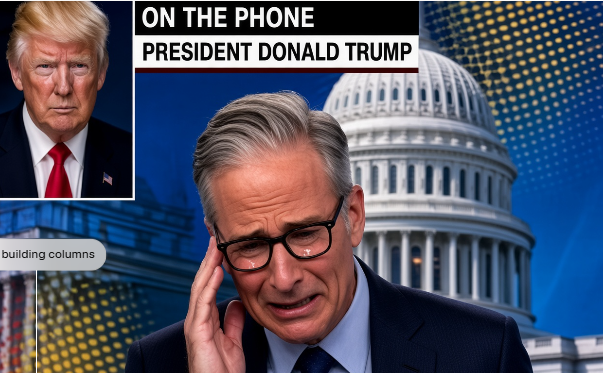
The unsolicited comment came at the fragile conclusion of a short telephone interview on CNN’s flagship Sunday program, State of the Union. Trump had broken a years-long network boycott to call in and offer public tribute following the sudden death of Senator Lindsey Graham, a critical South Carolina Republican and crucial political ally.
Anchor Jake Tapper had focused the conversation strictly on Graham’s political legacy. However, when Tapper attempted to pivot the dialogue toward pressing national issues, including the escalating conflict involving Iran, Trump steadfastly declined. He asserted that he wished only to speak about his “great friend” Graham out of respect.
As the interview concluded, Tapper extending a standard invitation for the president to return for a more in-depth discussion.
“I will,” Trump agreed. But before Tapper could move to a commercial break, the president delivered his verdict on CNN’s editorial direction.
“We’re trying to have CNN go on a normal path,” Trump said, a casual but potent statement. “And we will do that.”
Tapper immediately responded, defending his organization’s work. “Well, I’m on a normal path right here, sir, and I appreciate your time.”
“Good. You are,” Trump replied, just before the line disconnected.
A Comment with a Volatile Subtext
The brief, enigmatic exchange instantly captured headlines, not because of what was said, but because of who was saying it to whom. Trump’s historic relationship with CNN has been defined by extreme contentiousness; he has routinely branded the network “fake news” and made it the chief antagonist in his narratives about media bias.
The statement itself, while direct, offered no definition. The president did not identify a mechanism for White House intervention, nor did he enumerate specific editorial policies he wished to see revised. As a result, the comment alone does not constitute evidence of imminent, government-directed censorship.
Instead, the moment serves as a rare, unfiltered admission of a long-held view. In his first significant interaction with the network in years, Trump felt compelled to publicly state that he views CNN as currently off-course and believes he has a role in correcting its trajectory.
Ownership in Limbo and the Independence Question
The backdrop of this exchange adds significant context and potential weight to the president’s words. CNN’s corporate parent, Warner Bros. Discovery, is currently navigating a tectonic shift in media ownership.
The Justice Department’s Antitrust Division confirmed in June it had cleared Paramount Skydance’s proposed $110 billion acquisition of Warner Bros. Discovery, concluding the transaction would not harm competition. If finalized, the deal would place two of the oldest and largest television news organizations—CNN and CBS News—under a single corporate umbrella.
This potential consolidation has fueled intense internal and external debate regarding future editorial priorities and independent oversight. To address these concerns, as part of a recent regulatory settlement, Paramount Skydance CEO David Ellison agreed to establish a five-member editorial-independence board tasked with protecting journalistic standards at both CNN and CBS.
This mechanism has already drawn scrutiny. Media analysts have questioned whether such a board, whose members would invariably be connected to the corporate ownership structure, could truly provide robust, independent oversight, especially if ownership feels pressure from a powerful, media-skeptic White House.
A Complicated, High-Stakes Coexistence
The July interaction demonstrates that Trump and CNN remain locked in a complex, mutually reactive relationship. While Trump has made rejecting CNN a pillar of his brand, he was willing to appear when the moment suited his narrative regarding a key ally. For its part, CNN continues to interview him, demonstrating its commitment to covering a figure who has repeatedly challenged its very right to operate unencumbered.
Ultimately, the transcript of the call does not support an interpretation of immediate White House control over CNN’s newsroom. The phrase “normal path” is a blank slate upon which Trump’s allies and critics are currently writing two very different futures. For the network, this episode is a stark reminder that as its ownership structure faces immense change, it is being watched by a president who has already declared his intent to shape what comes next.