Skip to main contentSkip to toolbar About WordPress the phdailynews.org 44 updates available Ctrl+KOpen command palette 9494 Comments in moderation New View Post SEOEnter a focus keyphrase to calculate the SEO score Site Kit HackGuardian Clear Cache 🧽 Howdy, Thavath Screen OptionsHelp Edit Post Add Post Add title Leavitt Sets Media Straight With Fact-Check On Joe Biden Skip to Editor Permalink: https://thephdailynews.org/leavitt-sets-med…eck-on-joe-biden/ Edit Add MediaVisualCode
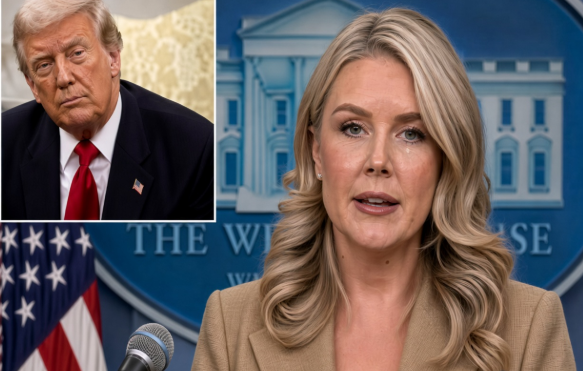
White House Press Secretary Karoline Leavitt presented a compelling statistic about how
accessible President Donald Trump has been just a year into taking office and how little the public ever saw former President Joe Biden during his term. While speaking at a media event hosted by Axios co-founder Mike Allen, Leavitt highlighted the contrast between President Donald Trump’s accessibility and that of Biden. She also pointed out that many in the media overlooked Biden’s avoidance of the media and his largely “hiding” behavior during his four years in office. “You have tailed access to the ‘Associated Press,’ which reaches half the world’s population every day. The most definitive photo of President Trump, the fight, fight, fight photo after the assassination attempt in Butler, Pennsylvania, was made by Evan Vucci, who’s the chief photographer in Washington for the ‘Associated Press.’ Do you worry about history being lost with these new restrictions?” Allen asked Leavitt.
“I don’t view them as restrictions. We view them as opening access to more outlets, more voices, more news, journalists and outlets. We shouldn’t have a few outlets who have a monopoly over the briefing room or over that 13 person press pool that covers the president. And so we’ve actually ensured that more print outlets like Axios have a greater chance of being part of that 13 person press pool,” Leavitt began. “There are thousands of outlets who have White House press credentials. There are hundreds that actually show up every day and cover the beat. Why should a single outlet have the privilege of being in that 13 person press pool every single day. And so the changes we’ve made have actually created more transparency, more accessibility, and greater access for a broad variety of outlets and a diversity of journalists, which I think is a good thing. And we’ve seen that play out,” Leavitt added.
“I mean, we started this. I think you’re all still getting your news, right? You’re still hearing about what the administration is doing every single day, because we have good journalists who are in that room covering the president every single time,” Leavitt said.
Allen jumped in and asked: “The counter to that is in a White House Correspondents Association’s statement about the White House changes to the position of wire services in the pool. And the statement says the government should not be able to control the independent media that covers it. Do you agree with that statement?”
WATCH:
https://twitter.com/x/status/2906862
“Well, I think that a small group of journalists who comprise the board of the White House Correspondents Association should not dictate who gets to go into the Oval Office and who gets to ride on Air Force One. There should be equal access for all outlets,” Leavitt responded.
“And that’s exactly what we’re doing. And if we were trying, by the way, to create positive press for the president, if we were trying to make it easier on him or on the administration, we wouldn’t allow some of these fake news leftist outlets in. But we continue to do that. No one has been restricted. We’ve just given more spots to more outlets and more voices,” she said.
Leavitt concluded, “It’s not about ideology. It’s just about increasing the wide variety of outlets that have access. And we live in a digital age, and we’re recognizing that at the White House. The president ran a nontraditional media campaign, which propelled him back to the highest office in the land. And we felt it was our responsibility to continue that in our coverage at the White House.”
In July, Axios published a story titled “Biden’s media evasion,” revealing that the Democrat held fewer press conferences and media interviews than any of the last seven presidents at the same point in their term. At that time, Biden had conducted only 164, compared to Trump’s 468.
The next lowest were George W. Bush with 248 and Ronald Reagan with 262.
Word count: 652 Last edited by Thavath on August 12, 2026 at 2:06 pm Move up Move down Show or hide panel Preview Changes(opens in a new tab) Status: Published EditEdit status Visibility: Public EditEdit visibility Revisions: 2 BrowseBrowse revisions Published on: Aug 11, 2026 at 14:58 EditEdit date and time SEO analysis: Not available Readability analysis: Needs improvement Move to Trash
Move up Move down Show or hide panel All Categories Most Used NewsMake primary Politics(Primary Category)Primary Uncategorized + Add Category Move up Move down Show or hide panel
Click the image to edit or update
Remove featured image
Move up Move down Show or hide panel Add Tag Separate tags with commas
Choose from the most used tags
Move up Move down Show or hide panel Move up Move down Show or hide panel SEO Readability Schema Social Optimize your content for discovery.
Focus keyphrase Focus keyphrase Type here Use the main word or phrase you want your content found for across search, AI, and beyond. Learn more about best practices for keyphrases.(Opens in a new browser tab)
Discover related keyphrases(Opens in a new browser tab)
Search appearance Determine how your post should look in the search results. Google preview Mobile Google preview: Switch to desktop preview. Currently showing mobile preview. Desktop Url preview:
the phdailynews.org thephdailynews.org SEO title preview: Leavitt Sets Media Straight With Fact-Check On Joe Biden – the … Meta description preview: Aug 11, 2026 - Please provide a meta description by editing the snippet below. If you don’t, Google will try to find a relevant part of your post to show in the search results. SEO title Insert variable Generate SEO title Title Page Separator Site title
Slug leavitt-sets-media-straight-with-fact-check-on-joe-biden Meta description Insert variable Generate meta description
SEO analysisEnter a focus keyphrase to calculate the SEO score
Add related keyphrase Premium
Track SEO performance
Internal linking suggestions Premium
Cornerstone content
Advanced
Insights Move up Move down Show or hide panel Thavath, 4 weeks ago (August 12, 2026 @ 14:06:52) Thavath, 2 months ago (July 21, 2026 @ 14:58:14) Move up Move down Show or hide panel Add Comment
No comments yet.
Thank you for creating with WordPress.Version 7.1