The Digital Echo Chamber: Unpacking the Viral Speculation Over Donald Trump’s Health
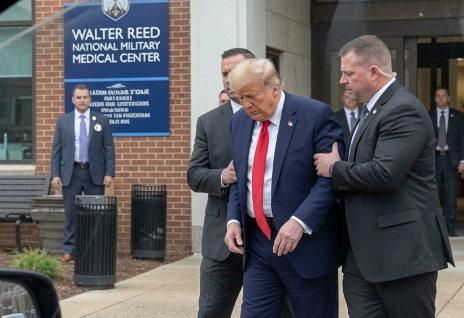
In the contemporary digital landscape, even the most subtle shifts in the public itinerary of a prominent figure can trigger a cascade of global speculation. This phenomenon was recently underscored when reports regarding the health of former U.S. President Donald Trump began to circulate across various online platforms. This incident highlights the intersection of public curiosity, the speed of social media, and the persistent challenge of distinguishing fact from fiction in a fast-moving news cycle. As a journalist, observing these patterns reveals how a minor scheduling change can be distorted into a national headline through the power of unverified digital narratives.The wave of discussion was primarily fueled by unverified claims on platforms such as X (formerly Twitter) and Facebook, where users suggested that Donald Trump had been admitted to Walter Reed National Military Medical Center. Despite a total lack of supporting evidence at the time, these posts garnered significant engagement. The speed at which this narrative traveled demonstrates how digital environments can amplify a “medical emergency” storyline before any official confirmation can be provided. This creates a challenging environment for both the general public and for fact-checking organizations trying to maintain an accurate record of events in real-time.At the heart of the frenzy was a relatively minor catalyst: a change in the former president’s public schedule. On April 4, it was announced that Trump would not attend certain planned events. Given his reputation for maintaining a rigorous and highly visible public presence, the cancellation was immediately viewed with suspicion by observers. In the absence of a detailed explanation for the change, a vacuum of information was created, which was quickly filled by assumptions and rumors. This illustrates the intense scrutiny faced by high-profile leaders, where any deviation from the norm is interpreted through a lens of potential instability or health crises.As the rumors reached a fever pitch, official representatives were forced to intervene to provide clarity. Statements released by his team clarified that Donald Trump had not been hospitalized and was, in fact, at his residence continuing his daily activities. Officials emphasized that there was no medical emergency, effectively debunking the viral claims that had dominated the news cycle for hours. This direct response was a necessary move to restore order to the public narrative and reassure those who had been misled by the rapid spread of misinformation, highlighting the importance of authoritative voices in moments of confusion.To provide a broader perspective, it is important to note that the health of public figures is a perennial topic of interest. Past disclosures have mentioned that Trump has chronic venous insufficiency, a relatively common condition among older adults where vein valves in the legs do not function properly, impacting blood circulation. However, medical experts and officials have been clear that this condition is manageable through standard care and played no role in the recent scheduling adjustments. The distinction between a manageable chronic condition and an acute health crisis is often lost in the chaotic environment of social media, where nuance is frequently sacrificed for engagement.The role of social media algorithms in this incident cannot be overlooked. These digital systems are designed to prioritize content that generates high levels of interaction, often favoring sensationalist or emotionally charged claims over dry, factual updates. In this case, the suggestion of a health crisis involving a former president was highly “shareable,” leading to a situation where the rumor reached millions before the truth could catch up. This pattern is a recurring theme in the digital age, where the “viral” nature of a post is often conflated with its accuracy, leading to a distorted public perception of reality.This episode also serves as a critical lesson in media literacy. For the public, the ability to navigate a sea of unverified information is becoming an essential survival skill. By waiting for official statements and relying on reputable news outlets, individuals can help mitigate the spread of digital misinformation. The incident underscores that while technology allows for the instantaneous sharing of news, the traditional journalistic values of verification and transparency remain the most effective tools for maintaining an informed citizenry. Responsible reporting involves resisting the urge to follow viral trends until the facts are fully established.Ultimately, the situation surrounding Donald Trump on April 4 reveals the fragile nature of public trust in the information age. While the rumors were eventually put to rest by official clarifications, the speed at which they took hold suggests a broader vulnerability in how we consume news. Professional journalists and fact-checking organizations continue to play a vital role in providing a counterweight to the “rumor mill,” ensuring that facts remain at the forefront of public discourse even when speculation is at its peak. Moving forward, the incident serves as a reminder that in the tension between speed and accuracy, accuracy must always prevail.