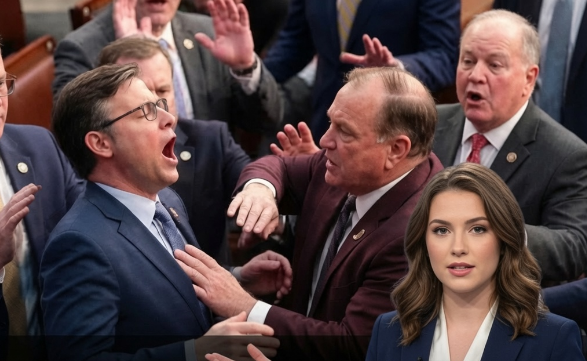
House Narrowly Passes SPEED Act to Fast-Track AI Infrastructure and Curb Regulatory Delays
In a high-stakes legislative move, the U.S. House of Representatives has approved the SPEED Act by a narrow margin of 218-213. This legislation is designed to accelerate federal permitting for large-scale artificial intelligence data centers and the critical power infrastructure required to sustain them. Despite the slim victory and sharp partisan divides on the House floor, the bill underscores a growing consensus among lawmakers that American AI capabilities are inextricably linked to national security and economic competitiveness.The centerpiece of the SPEED Act involves significant reforms to the National Environmental Policy Act (NEPA). The bill aims to truncate environmental review processes that have historically delayed major construction for years. Furthermore, it slashes the statute of limitations for related legal challenges from six years down to just 150 days. Republican lead sponsor Rep. Bruce Westerman of Arkansas characterized the expansion of AI as a “national imperative,” stressing the urgency for the United States to maintain its technological lead over China.While major tech corporations such as OpenAI, Micron, Microsoft, and Nvidia have signaled their support, the bill faced notable resistance. Democrats, led by figures like Rep. Scott Peters of California, criticized the measure for allegedly codifying a broken status quo rather than pursuing a bipartisan overhaul. Meanwhile, internal tension within the Republican party emerged over amendments regarding green energy and offshore wind, adding to the session’s late-stage drama.This legislative push coincides with the Trump administration’s launch of the U.S. Tech Force, a two-year initiative intended to recruit 1,000 engineers and experts to modernize federal systems. Working alongside industry leaders like Amazon Web Services, Apple, Google, Oracle, and Palantir, the initiative aims to solve talent shortages. As the SPEED Act moves to the Senate, the debate continues over how to balance rapid technological growth with environmental safeguards.