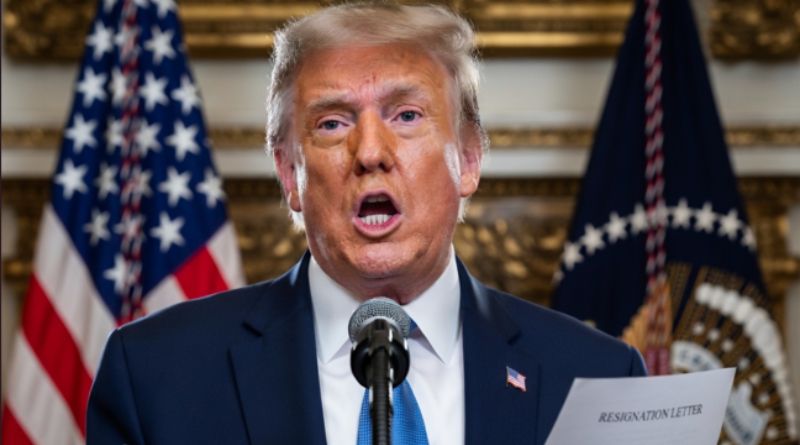
All twelve members of the Fulbright Foreign Scholarship Board have resigned, citing serious concerns over actions taken by President Donald Trump’s administration that they believe undermine the integrity of the program. In a joint statement, the board announced their immediate departure, explaining they could not support decisions they view as unlawful, harmful to U.S. interests, and contrary to the mission established by Congress nearly 80 years ago. The Fulbright program, long regarded as a cornerstone of international academic exchange, was designed to operate independently and remain free from political or ideological influence. The board emphasized that it has consistently upheld these principles under both Democratic and Republican administrations. However, members argued that the current administration has overstepped its authority.
According to the resignation letter, officials denied Fulbright awards to a number of candidates who had already been selected for the 2025–2026 academic year. In addition, approximately 1,200 foreign recipients are reportedly undergoing what the board described as an unauthorized review process, with the possibility that further awards may be revoked. Board members warned that these actions conflict with federal law and threaten key values such as academic freedom and free expression. They also noted that they had repeatedly raised their concerns with senior administration officials, both privately and in writing, but received no meaningful response. The board expressed hope that Congress, the courts, or future leadership would take steps to protect the program from political interference. They cautioned that introducing ideological considerations risks weakening or dismantling a respected initiative that has promoted global understanding for decades.
Meanwhile, officials within the Trump administration have pointed to growing national security concerns to justify increased scrutiny of foreign scholars. One recent case involved Chengxuan Han, a Chinese national arrested for allegedly attempting to smuggle biological materials into the United States for research at the University of Michigan. Authorities said the materials included nematode growth medium and plasmids sent through mailed packages. Federal officials described the case as part of a broader pattern raising security concerns. In addition, a student publication at Stanford University has reported allegations of a wider network of Chinese espionage, highlighting ongoing tensions between academic openness and national security priorities.