U.S. Launches Airstrikes After Trump Accuses Iran of Violating Strait of Hormuz Ceasefire
President Donald Trump warned that Iran would face consequences after accusing Tehran of launching a drone attack against a commercial cargo vessel in the Strait of Hormuz. Within hours, the U.S. military carried out airstrikes targeting Iranian military infrastructure, marking a significant escalation in regional tensions.
In a post on Truth Social, Trump said Iran launched four one-way attack drones at commercial ships transiting the strategic waterway. According to the president, one drone struck the upper deck of a cargo vessel, causing damage but allowing the ship to continue its voyage, while U.S. forces intercepted the remaining three drones.
“The Islamic Republic of Iran shot at least four One Way Attack Drones at Ships transversing the Strait of Hormuz,” Trump wrote. “Obviously, this is a foolish violation of our Ceasefire Agreement.”
When asked by reporters whether Iran would face retaliation, Trump responded, “You’ll find out.”
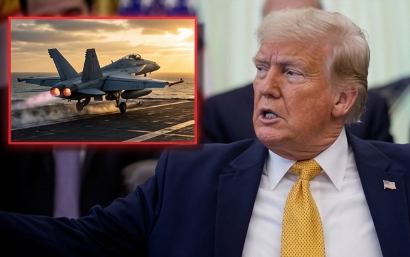
Later that day, U.S. Central Command (CENTCOM) announced that American forces had conducted strikes against Iranian missile and drone storage facilities, as well as radar installations. CENTCOM described the operation as a “powerful response” to what it called an unprovoked attack on commercial shipping.
“The unwarranted aggression against commercial shipping by Iranian forces clearly violated the ceasefire,” CENTCOM said in a statement.
According to a U.S. official cited by CBS News, six U.S. military aircraft struck four separate targets near the Strait of Hormuz and on Iran’s Qeshm Island before completing the mission.
Officials said the military response followed a drone attack on a Singapore-flagged cargo ship traveling through the Strait of Hormuz. The vessel reportedly sustained damage to its bridge, but no injuries or environmental damage were reported. The United Kingdom Maritime Trade Operations Centre said the incident occurred off the coast of Oman.
The exchange has raised new concerns about the stability of the ceasefire agreement reached earlier between Washington and Tehran. Under the reported memorandum of understanding, Iran agreed to help ensure safe passage through the Strait of Hormuz while negotiations continue over its nuclear program and broader regional security issues.
Vice President JD Vance defended the administration’s response, stating that the United States had complied with the ceasefire and warning that any future attacks would be met with force.
“Iran signed a ceasefire agreement. We have honored it,” Vance wrote on social media. “If they have disagreements about how the memorandum of understanding is being applied, they can pick up the phone. But violence will be met with violence.”
The strikes represent the first reported direct U.S. military action against Iran since the ceasefire took effect, adding new uncertainty to ongoing diplomatic efforts aimed at reaching a longer-term agreement between the two countries.