Justice Clarence Thomas Dissents After Supreme Court Declines Florida’s Lawsuit Against California and Washington
Justice Clarence Thomas issued a sharply worded dissent after the U.S. Supreme Court declined to hear a lawsuit filed by Florida against California and Washington, arguing that the Court has a constitutional obligation to resolve legal disputes between states.
Florida’s lawsuit alleged that California and Washington failed to comply with federal commercial driver’s license requirements by issuing licenses to certain applicants who, according to the state, did not meet federal standards related to English-language proficiency and immigration status. Florida argued that those alleged violations contributed to a fatal highway crash and created broader public safety concerns.
Because disputes between states fall under the Supreme Court’s original jurisdiction, Florida filed its case directly with the nation’s highest court. However, a majority of the justices declined to hear the lawsuit without providing a detailed explanation.
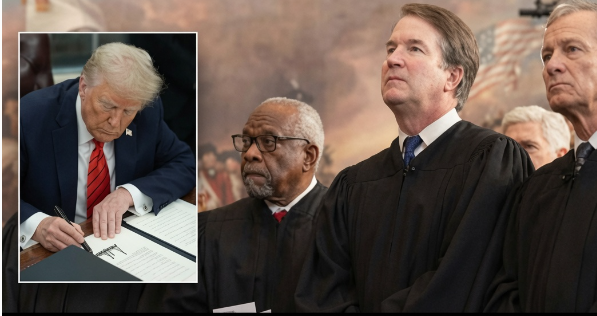
In his dissent, Thomas, joined by Justice Samuel Alito, argued that refusing to hear the case effectively denied Florida any judicial forum for its claims.
“If this Court does not exercise jurisdiction over a controversy between two States, then the complaining State has no judicial forum in which to seek relief,” Thomas wrote.
Thomas maintained that the allegations raised significant questions involving federal commercial licensing standards and highway safety. He cited the fatal Florida crash involving truck driver Harjinder Singh, writing that the state should have been allowed to present evidence supporting its claims that federal licensing requirements had not been properly enforced.
According to Thomas, federal law requires applicants for commercial driver’s licenses to pass the required examinations, demonstrate sufficient English-language proficiency, and satisfy applicable legal eligibility requirements before receiving a license. He argued that failure to enforce those standards could pose serious risks to public safety.
Thomas further emphasized that while the Supreme Court has broad discretion in deciding whether to hear most appeals, lawsuits between states occupy a unique constitutional role because no other federal court has authority to resolve them.
“We have no more right to decline the exercise of jurisdiction which is given, than to usurp that which is not given,” Thomas wrote.
The Court’s decision leaves Florida unable to pursue its claims before another judicial forum, according to Thomas’s dissent. The majority did not explain its reasons for declining the case, a common practice when the Court denies review.
The dispute highlights broader legal questions regarding the Supreme Court’s original jurisdiction, federal licensing standards, and the extent of the Court’s responsibility to hear conflicts between states. Thomas’s dissent underscores continuing debate among the justices over how that constitutional authority should be exercised in cases involving interstate disputes.