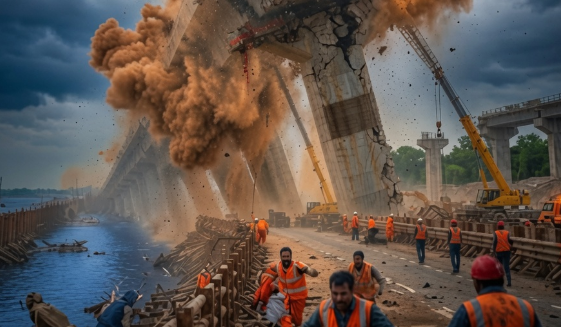
A powerful 7.7-magnitude earthquake struck the border regions of Myanmar, northern Thailand, and southern China early Monday morning, sending shockwaves through a seismically active area and disrupting the lives of thousands of residents.
The quake’s epicenter was located in a remote, mountainous zone near the China–Myanmar border. Its shallow depth amplified the intensity of the shaking, catching many people off guard during the early morning hours while they slept. Tremors were widely felt across the tri-border region, prompting panic in communities unaccustomed to such strong seismic activity.
Preliminary reports indicate substantial damage to homes, public buildings, schools, and critical infrastructure, including roads and bridges. Transportation routes have been severely disrupted in several areas, complicating access for emergency responders. Local authorities and rescue teams are navigating difficult terrain to reach isolated villages, where entire communities may have been cut off. Medical facilities are treating the injured, while temporary shelters are being established for displaced families.
The vulnerability of older buildings and infrastructure to intense ground motion remains a major concern for safety officials. In some locations, collapsed structures and landslides triggered by the quake have added to the challenges faced by first responders. Relief efforts are being coordinated between national governments, local agencies, and international humanitarian organizations, with supplies including food, water, medical kits, and tents being mobilized.
As assessment teams continue to survey the affected zones, the full scale of the destruction and the number of casualties are still being determined. Officials have called on residents to avoid damaged buildings, stay informed through official channels, and prepare for possible aftershocks.
This event serves as a stark reminder of the seismic risks in Southeast Asia, where tectonic plates converge and active fault lines run through several countries. Experts note that the region’s mountainous geography and varying building standards can exacerbate the impact of major earthquakes. Regional governments have pledged continued support for recovery operations, while international partners stand ready to provide additional assistance if needed.
Recovery is expected to be a prolonged process, with focus now shifting toward restoring essential services, rebuilding infrastructure, and supporting affected communities in the weeks and months ahead.