Diplomacy Under Pressure: The Trump Administration’s High-Stakes Iran Negotiations
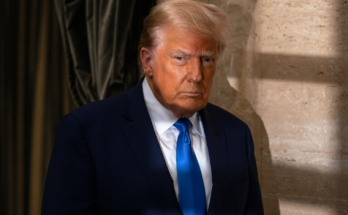
The Trump administration, spearheaded by President Donald Trump, Vice President JD Vance, and Secretary of State Marco Rubio, is actively hammering out the final details of a potential deal to terminate the war with Iran. During a high-profile trip to India, the President underscored the non-negotiable status of international maritime routes, asserting that the Strait of Hormuz must remain open to global traffic. Describing the current regional instability as “unlawful” and “unacceptable,” Trump has signaled a shift toward an aggressive diplomatic posture intended to force a sustainable resolution for the global community.While diplomats gather, the conflict remains active on the ground. U.S. Central Command (CENTCOM) recently executed what were described as “self-defense strikes” in southern Iran to neutralize threats against American personnel. Capt. Tim Hawkins, a spokesperson for CENTCOM, reported that these strikes targeted missile launch sites and Iranian boats attempting to deploy mines near the strategic port of Bandar Abbas. Currently, dozens of American warplanes and nearly two dozen Navy warships—including two aircraft carriers—are enforcing a blockade in the Gulf of Oman and the Arabian Sea. Despite a fragile six-week cease-fire, U.S. forces have encountered surface-to-air missile threats, necessitating precise military intervention.Parallel to these military skirmishes, critical talks are unfolding in Qatar. Secretary Marco Rubio has maintained a firm stance, stating that the President is focused on securing a “good deal or no deal” to ensure American interests are fully protected. On the Iranian side, foreign ministry spokesman Esmaeil Baqaei acknowledged that while the parties have reached conclusions on a large portion of the agenda, a final agreement remains elusive. Tehran remains cautious, accusing Washington of inconsistent positioning. However, U.S. officials suggest the administration is satisfied with the current trajectory, noting that military pressure has seemingly made Iranian officials more flexible regarding long-term concessions.The framework of the proposed deal is significantly more rigorous than the 2015 agreement. Key provisions include Iran relinquishing its stores of highly enriched uranium and reopening the Strait of Hormuz in exchange for the lifting of the U.S. blockade. President Trump has explicitly critiqued the previous administration’s approach, citing the “massive amounts of cash” and a path to nuclear weaponry as major historical failures. The current objective is an enforceable, long-term promise—potentially lasting 20 to 30 years—that prevents nuclear enrichment entirely. As negotiations continue, the Trump administration remains focused on ensuring that any final pact is “good and proper” and significantly more restrictive than previous iterations.