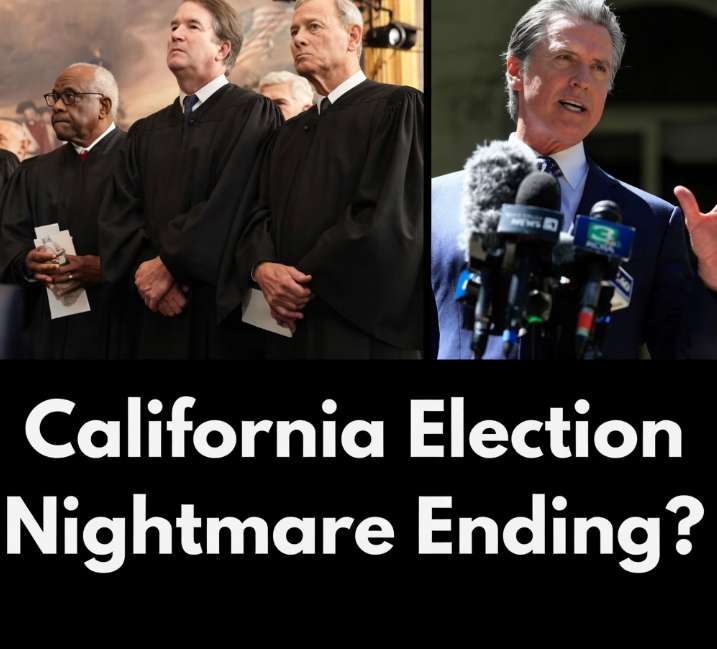
A closely watched election-law case before the U.S. Supreme Court could have far-reaching implications for how federal elections are administered across the country, including in California and numerous other states that continue counting certain mail ballots after Election Day.
The case, Watson v. Republican National Committee, examines whether federal law permits states to count ballots that arrive after Election Day if they were mailed on or before that date. The dispute stems from a Mississippi law allowing absentee ballots to be counted if they are postmarked by Election Day and received within five business days afterward.
Republican challengers argue that the policy conflicts with federal statutes establishing a uniform national Election Day for presidential, Senate, and House elections. They contend that ballots must be received by Election Day to be legally counted in federal contests. Mississippi officials, however, maintain that states possess broad authority over election administration and that ballots cast on time should remain valid even if postal delays result in later delivery.
The legal challenge originated after Mississippi enacted House Bill 1521 during the COVID-19 pandemic, creating a five-day grace period for absentee ballots. Although a federal district court initially upheld the law, the U.S. Court of Appeals for the Fifth Circuit later ruled that federal election law preempts the state’s post-Election Day receipt window.
The Supreme Court agreed to hear the case, and a decision is expected before the conclusion of the current term. The ruling could affect approximately 15 states and the District of Columbia, all of which permit some form of post-Election Day ballot receipt period. California, for example, counts mail ballots postmarked by Election Day if they arrive within seven days.
Supporters of stricter receipt deadlines argue that a uniform national standard would enhance clarity and reduce prolonged vote-counting periods. Opponents contend that such a requirement could disenfranchise voters whose ballots are delayed through no fault of their own.
The Court’s decision could become one of the most significant election-law rulings in recent years, shaping federal election procedures nationwide for the foreseeable future.