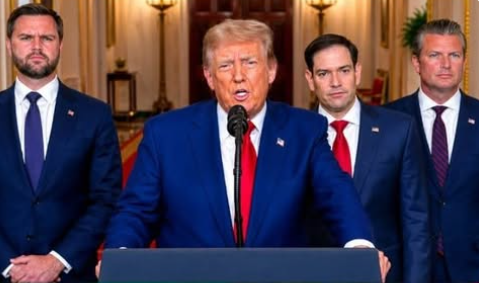
In a high-stakes display of coercive diplomacy, the administration of President Donald Trump, alongside Vice President JD Vance and Secretary of State Marco Rubio, is currently navigating the final, volatile stages of a potential peace deal to terminate the conflict in Iran. While negotiations are underway in Qatar, the geopolitical landscape remains fraught with tension. Marco Rubio recently signaled a hardline stance during a visit to India, asserting that the Strait of Hormuz must be reopened to international traffic. Describing the current maritime restrictions as illegal and unsustainable, Rubio emphasized that while progress is being made on the specific language of a peace document, the United States is prepared to walk away if the terms do not meet the President’s standards for a “good deal.”
Simultaneous with these diplomatic efforts, the U.S. Central Command (CENTCOM) executed what it described as “self-defense strikes” in southern Iran. According to Captain Tim Hawkins, the strikes targeted missile launch sites and Iranian boats attempting to deploy mines near the strategic port and naval base at Bandar Abbas. These military actions occurred despite a six-week-old ceasefire, highlighting the fragile nature of the current stand-off. A senior U.S. official noted that the strikes were a direct response to threats posed by Iranian surface-to-air missiles against American warplanes and a naval fleet—including two aircraft carriers—currently enforcing a blockade in the Gulf of Oman and the Arabian Sea.
The architecture of the proposed agreement hinges on significant concessions regarding nuclear capabilities and maritime access. Under the discussed framework, Iran would be required to dispose of its highly enriched uranium and provide a verifiable commitment to cease enrichment activities for a period of 20 to 30 years. In exchange, the United States would lift its blockade of the Strait of Hormuz and ease economic sanctions. Trump administration officials have expressed a desire for a deal that surpasses the 2015 Obama-era nuclear agreement in both scope and enforcement, criticizing the previous administration for providing Iran with liquid assets while allowing a pathway to nuclear weapons development.
Despite the optimism from Washington, Tehran remains cautious. Iranian Foreign Ministry spokesman Esmaeil Baqaei confirmed that understandings have been reached on a large portion of the agenda, yet he warned that a final signature is not imminent. Baqaei accused the United States of shifting its positions during the Qatar talks, suggesting that while the framework is visible, trust remains a significant barrier. Nevertheless, U.S. officials maintain that the recent military operations have made the Iranian leadership more amenable to a deal, reinforcing the administration’s belief that “peace through strength” will ultimately secure a long-term resolution to the regional crisis.